Six Pillars for CRM Data Governance Mapped to NIST, ISO and DAMA

CRM data governance is the set of policies, roles, standards, data-quality controls, and monitoring practices that keep customer data accurate, secure, and fit for decision-making. We recommend building it as a six-pillar program: policy, roles, metadata and standards, data quality, access controls, and monitoring. Done well, it produces trusted records, protected personal data, and analytics you can act on with confidence.
TL;DR:
Implementing CRM data governance with clear policies and designated roles reduces data decay and enhances trust for analytics and decision-making.
Focusing on high-impact, low-effort fixes like mandatory fields delivers quick wins and builds stakeholder confidence early.
Using recognized standards such as ISO, NIST, and DAMA frameworks helps streamline auditability and aligns CRM governance with broader data management practices.
Automating day-to-day data health techniques, including validation, and monitoring dashboards, maintains data quality with minimal manual effort.
Building governance controls on no-code platforms allows for rapid pilot deployment and easier ongoing management without extensive development resources.
Table of Contents
-
A practical framework: pillars, artifacts, and minimum viable governance
-
Roles, policies, and standards that keep governance auditable
-
How SoftEXIT CRM and SoftEXIT Studio™ support a governance pilot
Why CRM data governance matters now
Messy CRM data is not a cosmetic problem. Duplicate contacts skew pipeline forecasts, inconsistent field values break segmentation, and sales teams stop trusting a system they cannot rely on, which quietly kills adoption. Once reps start keeping their own spreadsheets, the CRM becomes a reporting chore instead of the operational source of truth it was meant to be.
Privacy and security exposure compounds the problem. CRM records typically hold names, emails, phone numbers, deal values, and sometimes payment or health details, all of which fall under regulatory obligations depending on the jurisdiction and industry. The NIST DGM Profile concept paper frames governance as the connective layer between data management, privacy, cybersecurity, and AI risk, arguing that organizations need deliberate decision rights rather than ad hoc fixes.
Governance addresses both problems at once:
-
Clear ownership reduces the silent data decay that erodes forecast accuracy.
-
Defined access controls limit exposure when an employee leaves or a record is misused.
-
Documented quality rules catch bad data before it reaches a report or an AI model.
-
Consistent standards make CRM data usable across marketing, sales, and support instead of siloed by team.
A practical framework: pillars, artifacts, and minimum viable governance
Treat governance as a set of concrete artifacts, not an abstract commitment. Each pillar below should produce something your team can point to and audit.
-
Policy: a short data classification scheme (public, internal, restricted, regulated), a retention schedule by record type, and an access policy stating who can view or export what.
-
Roles: named data owners for each major object (contacts, companies, deals), data stewards who handle day-to-day quality issues, and a governance council that resolves conflicts and approves policy changes.
-
Metadata and standards: a data dictionary defining every required field, naming conventions for picklists and tags, and a list of fields that are mandatory at creation.
-
Data quality: validation rules at intake, with matching logic, and a cadence for enrichment so stale records get refreshed rather than abandoned.
-
Access and security: role-based access control (RBAC), protected fields for sensitive data like payment details or national ID numbers, and audit logs that record who touched what and when.
-
Monitoring: a data health dashboard tracking completeness and duplication, a quarterly audit cadence, and a clear escalation path when metrics slip.
Minimum viable governance does not require all six pillars at full maturity on day one. A realistic starting point is a one-page policy, two named owners, a ten-field data dictionary, RBAC on your three most sensitive fields, and a single completeness metric reviewed monthly. Expand from there once the basics hold.
How to implement CRM data governance step by step
Governance programs fail most often when they try to fix everything before fixing anything. A staged rollout over six to twelve months keeps the work visible and the wins concrete.
-
Assess: inventory your CRM objects and fields, identify who currently “owns” each one informally, and list the three pain points causing the most complaints, whether that is duplicate leads, missing phone numbers, or unclear access.
-
Prioritize: score fixes on value versus effort. Enforcing required fields at entry, and locking down protected PII fields are typically high value and low effort, which makes them strong quick wins.
-
Pilot: pick one object and one business unit. Define success criteria in advance, such as a completeness threshold or a duplication rate reduction, and get sign-off from the relevant data owner before you start.
-
Roll out and sustain: train users on the new intake rules, automate validation where possible, and put governance reviews on a recurring calendar so the work does not quietly stop after launch.
-
Measure continuously: track data completeness, duplication rate, error rate at intake, and the number of access incidents, then report these numbers to the governance council on a fixed schedule.
Pro Tip: Run your first pilot on contacts or companies only, since cleaning one entity well builds more credibility with stakeholders than a partial fix across five entities.
Roles, policies, and standards that keep governance auditable
Governance only works when decision rights are explicit. A simple role matrix removes the ambiguity that causes policies to stall.
-
Data owners approve changes to field structure and retention for their object and are accountable when quality metrics slip.
-
Data stewards handle daily cleanup, flag recurring quality issues, and enforce intake rules in practice.
-
Governance council meets periodically to resolve cross-team conflicts, approve new policies, and review audit findings.
Four documents cover most audit requests: a data classification policy, a retention and deletion schedule, an access control policy naming who can see or export regulated fields, and an incident response procedure for breaches or misuse.
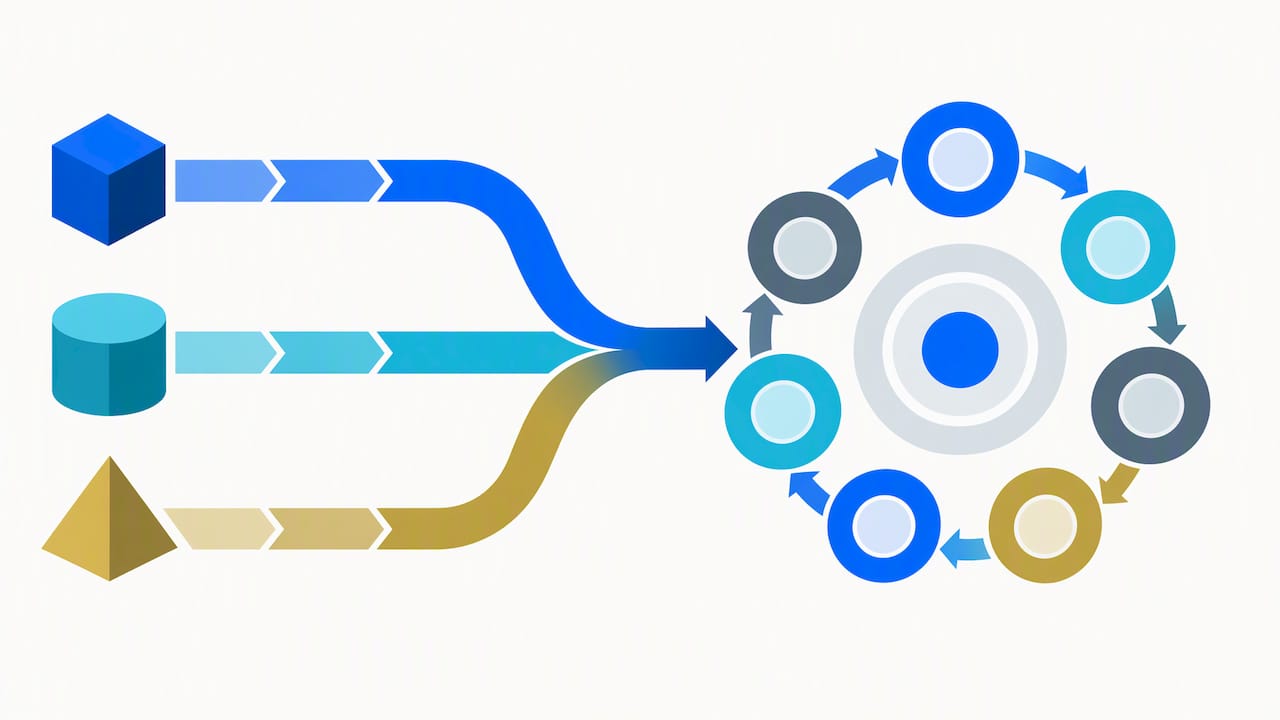
Aligning these documents to recognized frameworks makes audits faster. The NIST Risk Management Framework offers a repeatable seven-step process, Prepare, Categorize, Select, Implement, Assess, Authorize, and Monitor, that maps cleanly onto a CRM governance cycle. For privacy obligations under regulations like the GDPR, Microsoft’s compliance guidance recommends using ISO/IEC 27001 and ISO/IEC 27701 controls as the backbone for accountability. The DAMA-DMBOK body of knowledge gives vendor-neutral language for all of this, which is useful when writing policy that needs to survive a platform change.
Operational techniques that keep CRM data healthy
Day-to-day CRM health comes down to a few repeatable practices rather than a single tool.
-
Intake controls: validated forms, canonical source lists for things like industry or region, and enrichment pipelines that fill gaps automatically rather than leaving fields blank.
-
Monitoring: a health dashboard for completeness, audit logs for sensitive field access, and alerts when error rates spike.
-
AI and automation: useful for enrichment, auto-tagging, but risky when used for unsupervised auto-merge, since a wrong merge can permanently blend two customer histories. For expert guidance, consider AI Consulting & Transformation as a Service to implement safe AI-assisted enrichment and governance.
How SoftEXIT CRM and SoftEXIT Studio™ support a governance pilot
We built our CRM on a no-code application platform, specifically so governance controls do not require a development project to put in place.
-
Role-based security and protected fields let us lock down sensitive data, like payment or identification details, without custom code.
-
Hierarchical data structures make it straightforward to model owner and steward relationships directly in the CRM.
-
Automated data intake and interactive dashboards support the quick wins described above: required fields at entry, and a live completeness view for the governance council.
A practical pilot on the platform might start with a data dictionary for contacts, a protected-PII rollout on payment fields, and a role-based dashboard for the governance council to track progress.
Keep governance pragmatic and sustainable
The biggest risk to a governance program is not weak policy. It is writing so much policy that nobody can act on it. Favor a handful of measurable rules over a binder nobody reads, and revisit them quarterly. Governance survives when stakeholders see it solve a real complaint, not when it arrives as a mandate from a committee they never spoke to.
— James Edgell
Start a CRM data governance pilot with SoftEXIT
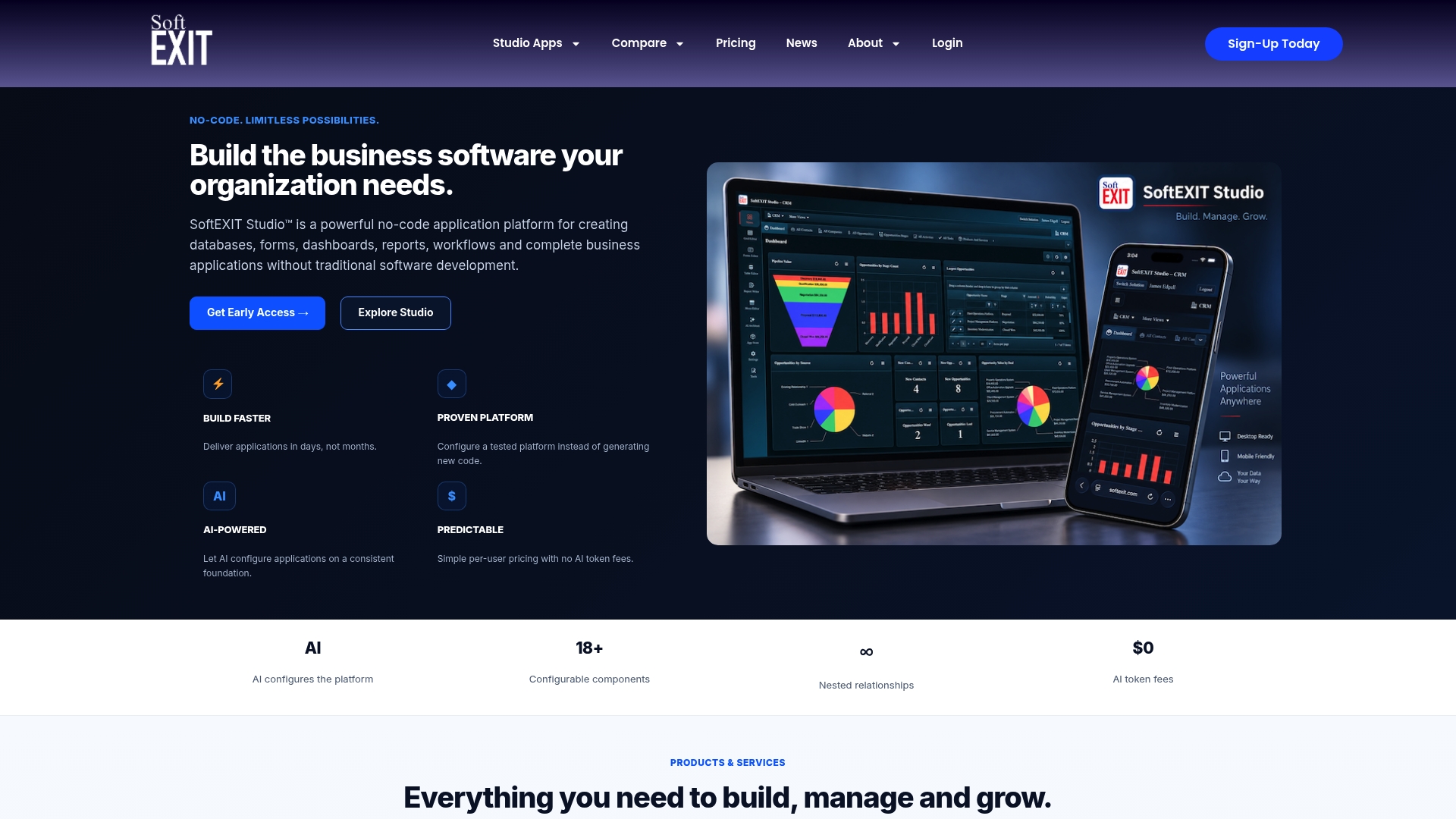
We built our CRM so governance controls like role-based security and protected fields are configuration choices, not development projects, which means a pilot can go live in weeks instead of quarters.
-
See how protected fields, hierarchical data, and dashboards work together in our SoftEXIT CRM walkthrough.
-
Explore the SoftEXIT CRM product page for the full feature set behind a governance pilot.
-
If you want help scoping or running the pilot itself, our Professional Services team can configure the controls with you.
FAQ
What are the four pillars of a CRM?
CRM platforms are generally organized around contact and company management, sales pipeline tracking, activity and task management, and customer service or support records. These four areas are the core objects that CRM data governance policies typically need to cover.
What is CRM in data management?
In data management terms, a CRM is the system of record for customer, contact, and deal data, which makes it a primary target for governance controls like data quality rules, access restrictions, and retention policies. Treating CRM data with the same rigor as other enterprise data, using frameworks like DAMA-DMBOK, keeps it reliable for reporting and AI use.
What are the five pillars of data governance?
Definitions vary across frameworks, but a common version includes policy, roles and accountability, data quality, metadata and standards, security and access controls, and monitoring as a key pillar. The NIST DGM Profile concept paper frames these as connected activities rather than isolated checklists.
What are the top data governance tools?
Tool needs depend on scale, but most organizations look for platforms that combine role-based access control, protected fields, data quality validation, and audit logging in one place rather than stitching together separate point tools. Our SoftEXIT CRM platform builds these controls directly into a no-code CRM, which is one practical option worth evaluating alongside others.
How do I integrate CRM governance with enterprise data governance?
CRM governance should follow the same classification, retention, and access policies your broader data governance program already defines, rather than creating a separate parallel set of rules. Naming a CRM data owner who sits on the enterprise governance council keeps the two programs aligned instead of drifting apart.
Sources
For deeper reading, the NIST DGM Profile concept paper and NIST Risk Management Framework outline federal approaches to data and risk governance. Microsoft’s GDPR accountability guidance maps ISO/IEC 27001 and 27701 to cloud and CRM compliance, and the DAMA-DMBOK remains the vendor-neutral reference for data management principles.
-
NIST Joint Frameworks Data Governance and Management Profile Concept Paper
-
Pipedrive passed ISO 27001 surveillance audit and received ISO 27701 certification